
Growing up in Miami, Cuban-American author Jennine Capó Crucet saw her ethnicity represented in every facet of her community. Having never been singled out for her otherness, she experienced many of the privileges afforded to most white Americans. Her race is simply rendered invisible by its prevalence. When she is suddenly immersed into affluent white America as a first-generation college student at a private university, she begins the painful journey of learning what it means to be an outsider and unlearning “whiteness” as the ultimate achievement.
As a college student, she finds little affirmation of belonging in an institution that was meant to help her reach her full potential. The more she advances in academia, the more she recognizes what it requires of her—to essentially erase her brownness in the process of molding herself into a model of white success.
Her poignant, unabashed writing goes beyond statistics about inequality and provides glimpses into her personal struggles—everything from ongoing imposter syndrome in her professional and personal life to choosing a suitable DJ for an interracial wedding. Her essays pick apart the flawed paradigm that shaped her own parents’ aspirations and her decisions as a young woman.
Crucet’s essay collection is not just a reflection on her upbringing and early career—it is a hand extended to all the young minorities in the U.S. who have had to change their name, their hair, their accents, and more, in an effort to thrive and advance in this world. It is a reality check for white Americans. It is a call to action for widespread systemic change, despite the fact that even the smallest acts of reform are often met with derision and defensiveness by the people who continue to benefit from and uphold the status quo.

“If I stop paying close attention, academia can be a comfortable, recognizable place, one where I am encouraged to buy into the falsehood of a meritocracy that promises the American Dream to anyone willing to work hard. But I’ve come to see the American Dream for what it really is: a lie my parents had little choice but to buy into and sell to me, a lie that conflated working hard with passing for, becoming, and being white.”
 Erosion is a collection of essays depicting the ways that modern priorities and lifestyles have led to the spiritual, physical, and political erosion of communities in the United States. At the core of Williams’ melodic, impassioned writing is a deep connection to her homeland of Utah and an earnest empathy for all living beings. Written over the last several years, Williams examines the political environment that enabled the gutting of national monuments and the auctioning of public lands to the Big Oil industry. These acts of aggression are emblematic of new incarnations of colonialism that deny indigenous sovereignty and the right of the American people to access wild spaces that are central to cultural identity and vitality.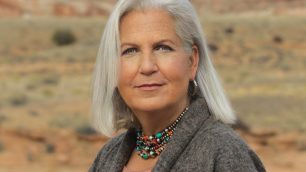
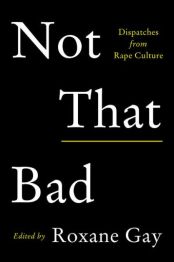 Roxane Gay began this anthology in an attempt to unravel the nebulous concept of “rape culture”– to engage with the question, “What is it like to live in a culture where it often seems like it is a question of when, not if, a woman will encounter some kind of sexual violence?” Ultimately, this piece became a place where diverse individuals across the gender spectrum could reclaim their own stories, free from expectations about what it means to carry the burden of trauma.
 ode to shelf-care