A Constellation of Vital Phenomena by Anthony Marra

51l1ADoTZzL._SX333_BO1,204,203,200_A Constellation of Vital Phenomena follows a group of interconnected characters in a small village in Chechnya following the fall of the Soviet Union and multiple wars for independence. After a man named Dokka is abducted by Russian soldiers, his 8-year old daughter is taken in by Ahkmed, a neighbor and lifelong friend. Together they take on the task of surviving in what’s left of their world where “happiness came in moments of unpredictable loveliness.”

Starting this book with virtually no knowledge of Chechnya or its history, it took me a large portion of the book to feel like I could understand the characters and the context. Marra calls into question what’s worth fighting for once a community is ravaged by war and with J.K. Rowling-esque mastery, weaves these characters together into a tangled mess of a masterpiece. An omniscient narrator provides glimpses into the future beyond the plot while also conveying bits of the human experience in excruciating detail. This well-researched story is as chaotic and morally ambiguous as war itself, and like many of my favorite books, will have readers chuckling and tearing up within the same page. I appreciated the dark humor, the quirkiness of the characters, and the jumps across time throughout a very complicated 10 years of Chechnya’s history. Definitely worth carrying this one to Costa Rica with me…

“The look on his face told her what had happened and that hurt burrowed deeper than anything she’d ever felt, deep enough to change from the thing she felt to the thing she was.”
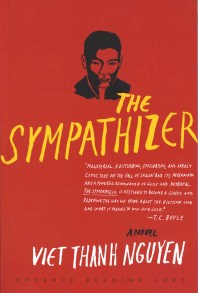
The Sympathizer by Viet Than Nguyen

sympathizer

For someone with only a surface-level understanding of the Vietnam War and its impact (especially beyond the narrow scope of the white, counterculture movement of the American 1960’s that dominates this chapter in US history books!), this novel felt like such an important read. It tells the story of a French-Vietnamese communist sleeper agent navigating life in America after the Vietnam War. While rejecting romanticized notions of all ethnicities– especially the American representation of Vietnamese in Hollywood–  Nguyen explores the diverse political and cultural identities of displaced and/or immigrant Vietnamese in the US.

Full of soldiers, academics, musicians, spies, journalists, and more, all of the characters have a satirical intensity but feel jarringly real. The book is laced with a witty, dark humor that I love and had me re-reading sections in order to fully appreciate the nuance of Nguyen’s prose. Both intellectual and plot-driven, it is definitely the most impressive book that I have read so far this year.

“But I was also one of those unfortunate cases who could not help but wonder whether my need for American charity was due to my having first been the recipient of American aid.”

“Disarming an idealist was easy. One only needed to ask why the idealist was not on the front line of the particular battle he had chosen.”

“We have all kinds of ways to talk about life and creation. But when guys like me go and kill, everyone’s happy we do it and no one wants to talk about it. It would be better if every Sunday before the priest talks a warrior gets up and tells people who he’s killed on their behalf. Listening is the least they could do.”


28BOOKNGUYEN-blog427-313x400

Among Strange Victims by Daniel Saldaña Paris

among strange victims

Rodrigo is a cynical, twenty-something writer contentedly shuffling through life when an unexpected development takes him from his commonplace job at a museum in Mexico City into a rural college town. Indifferent to things like emotional connections and career ambitions, Rodrigo finds meaning only in the most ordinary details of his everyday life, like the chicken in the vacant lot next to his apartment, which “begins to have pathological importance in relation to [his] daily routine.” As the title implies, this novel contains a strange cast of characters: Rodrigo, passive and hyper self-aware; the misogynist academics he finds in his company; and the various female characters who are unimpressive and defined only by what they provide to these self-important men. I don’t think any of the characters are meant to be admirable/likable. Amidst Paris’s rhetorical musings, time travel, and tequila-fueled antics, the story is an unflattering glance into the human ego.

“I don’t seek the permission of the Fates to find a soul mate with whom to deploy my melancholy; I can be alone, really alone, but I do ask the god of neural functions to let me retain this faint line of voice that crosses my cranium, allowing me to laugh at the world around me.”

2108o


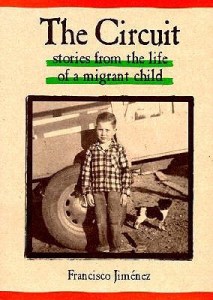
The Circuit by Francisco Jiménez

circuit

One of my favorite reads of this year, The Circuit is a short novel that introduces readers to the life of a child migrant worker from Mexico. Jiménez writes from the perspective of his childhood self, free from judgment or analysis. The language is simple and clear. For Panchito, living in a tent with his family of five is just the norm, but losing his marble collection is the ultimate tragedy. It’s a beautifully written story of growing up in a transient world where family comes first and life fits into a cardboard box. I read this book in one sitting (because it’s both short and hard to put down). The original Spanish version is Cajas de Cartón. 

War Dogs by Rebecca Frankel

war dogs

I enjoyed reading this one so much that I was genuinely disappointed when I unexpectedly reached the end of it on my Kindle. Frankel explores the world of military war dogs (MWDs) and their handlers in what is definitely the least depressing book about war that I’ve read. Despite the chilling anecdotes of explosive-detection missions in Iraq and Afghanistan, my lasting impression of War Dogs is one of admiration and moments of unexpected joy. The book captures the way that an emotional and professional relationship between MWDs and his fellow soldiers combines with an unparalleled physical ability to make these dogs such a powerful force. The only thing that could have made this book better for a nerd like me is more details on the physiology of a dog’s nose and the failed attempts by humans to replicate its expertise with technology.

“Mariana could see the force of the bullet as it hit Bronco…He was covered in blood but sitting all the same, waiting for his handler as if it had been the plan to rally at this safe spot all along… Bronco slumped to the ground, sprawled over on his side. Mariana’s heart stopped. He stared hard into the dog’s eyes, and then a terrible kind of relief washed over Mariana as he realized Bronco hadn’t just bled out in front of him. Instead, he had rolled over to offer his belly up for a scratch. Mariana exhaled, marveling at the strength of his dog.”

Astrophysics for People in a Hurry by Neil DeGrasse Tyson

51kyOGIHeIL._SX306_BO1,204,203,200_

The title is fairly self-explanatory…Tyson fits astrophysics into a short read that is accurate but comprehensible, funny, and poetic. It’s like a bed time story for nerds, starting with the first infinitesimally small moments when the universe started to expand and ending with Tyson’s personal manifesto on what the cosmological perspective means to him. Besides giving readers a basic grasp on universal principles and a rundown of key developments in the field of astrophysics, Tyson teaches us that knowledge of the still mysterious cosmos should make us feel BIG and not insignificant. It should give us peace of mind and a profound sense of appreciation, if only we can suppress our giant human egos.


Sapiens by Yuvah Noah Harari

sapiens

Sapiens is an origin story of our world, starting with the multiple upright species over 2 million years ago and leading up to the point just before humans engineer their own evolution into something else entirely. Unlike most traditional history books, it not only includes major shifts in political, economic, agricultural, and spiritual trends, but also dives into what that meant for people at the micro (psychological and biological) level and how those human experiences compare across the span of 70,000 years. Some of his arguments I disagreed with, particularly his take on modern violence, but overall I enjoyed the content. It reminds me of a more intellectual rendition of one of my favorite books, Ishmael by Daniel Quinn.


“Gender is a race in which some of the runners compete only for the bronze medal.”

“Biology is willing to tolerate a very wide spectrum of possibilities. It’s culture that obliges people to realize some possibilities while forbidding others.”

“A lot of evidence indicates that we are destroying the foundations of human prosperity in an orgy of reckless consumption.”

“So perhaps happiness is synchronizing one’s personal delusions of meaning with the prevailing collective delusions.”

cover-r4x3w1000-59c27e9de0f8f-webyuval-edit-1

we are never meeting in real life. by Samantha Irby

we are never meeting

I read this essay collection because Roxane Gay, one of my feminist heroines, said it was amazing, and she never disappoints. It made me laugh and cry and cringe within the same essay. The subjects are broad– normalizing the experience of being treated poorly in relationships during her twenties; disregarding money-saving tips in the most gloriously irresponsible ways; her evil cat, Hellen Keller, and more.

The author’s self-deprecating humor is woven into even the most humiliating and depressing situations, and her excellent use of ALL CAPS as a writing tool for emphatic expletives and strong opinions kept me laughing throughout. Irby’s writing is unapologetically vulnerable and self-confident in the best way. Chances are that this book will make you feel uncomfortable, but you should read it anyway.

All this might be easier if I could punch something, but I’m not a punch-something person. I’m a “sit in the dark in the bathroom with a package of sharp cheddar cheese slices” person.”


irby