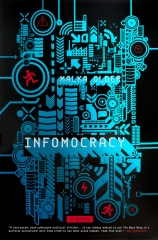
 An author and humanitarian worker, Malka Older’s novel Infomocracy comes at a pertinent time– when illegitimate information is being weaponized, and accuracy and transparency of data feels increasingly fragile. In Older’s utopian world of Infomocracy, Information with a capital “I” is glorified in a new world order. Here, groups of 100,000 people elect their own government, and things like the nation-state, guns, and war are obsolete.
As the election approaches, there are underground whisperings of a new threat to global peace, and it’s up to a few idealist individuals – an anti-election rebel, a policy-focused campaign specialist, and a badass employee of the Information bureaucracy—to unravel it before the well-ordered micro-democracy regresses into territorial warfare.
Taking place 20 years in the not so far future, the genre is mystery, action, sci-fi, and political commentary all rolled into one. As ideological dilemmas and power grabs unfold, Older reveals a nuanced ambivalence towards two things we hold dear in Western society—democracy and constant access to information. Infomocracy is an intriguing glimpse into the limitations of both of those things and why even the most carefully designed systems of governance are susceptible to the “quirks of neurobiology”.
“I suppose we should feel flattered they’re using Information rather than bombs for the moment.”
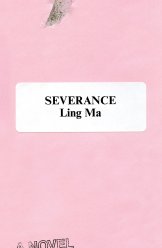 Candace is an aspiring photographer who thrives on the routine of her young professional life in New York City. She navigates the city in contented anonymity and plays her part as a competent and vital cog in the mass production of Bibles for publishing clients. As an epidemic of Shen Fever threatens the global population, Candace clings to the comforts of her 9 to 5 job, while the rest of the city flees to hometowns to find family and refuge. An orphaned daughter of immigrants, Candace is on her own until she joins up with a group of survivors led by Bob—an IT guy on a power trip, looking to enact his own vision for a new society.
 ode to shelf-care