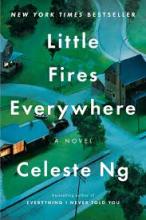
 Shaker Heights is the kind of community where garbage is stored always out of sight from the street, and every last detailed is planned, from the diversity of its population to the color scheme of each house. When a free-spirited artist, Mia, and her daughter Pearl move to town, their lives become entangled with the members of the Richardson family, each of whom are either enamored with or infuriated by Mia and Pearl’s nonconformity. After a public scandal arises surrounding the custody of an abandoned baby, everyone in town is obliged to take sides in a controversy that will put ambiguous ethics at odds with family loyalties.
The novel has a nostalgic feel from the pre-Internet late 90s, when there was still some mystery in the lives of teenagers, and digging into other people’s past required some old-school sleuthing. Celeste Ng deftly weaves through different time periods and perspectives, as each of the characters confronts the weight of their past decisions and struggles to move forward without casting judgment on themselves and others.
Set in a suburb founded on the idealism of planned order, the story peels back the façade of a community free from discrimination, conflict, and uncertainty. Messy emotions are unearthed. Fires, real and figurative, are ignited. Ng takes readers on a journey through uncomfortable gray areas with no clear way out.
“You’ll always be sad about this,” Mia said softly. “But it doesn’t mean you made the wrong choice. It’s just something that you have to carry.”
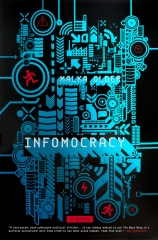 An author and humanitarian worker, Malka Older’s novel Infomocracy comes at a pertinent time– when illegitimate information is being weaponized, and accuracy and transparency of data feels increasingly fragile. In Older’s utopian world of Infomocracy, Information with a capital “I” is glorified in a new world order. Here, groups of 100,000 people elect their own government, and things like the nation-state, guns, and war are obsolete.
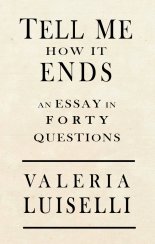 An essay in 40 questions, beginning with “Why did you come to the US? Where are your parents?”
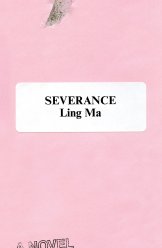 Candace is an aspiring photographer who thrives on the routine of her young professional life in New York City. She navigates the city in contented anonymity and plays her part as a competent and vital cog in the mass production of Bibles for publishing clients. As an epidemic of Shen Fever threatens the global population, Candace clings to the comforts of her 9 to 5 job, while the rest of the city flees to hometowns to find family and refuge. An orphaned daughter of immigrants, Candace is on her own until she joins up with a group of survivors led by Bob—an IT guy on a power trip, looking to enact his own vision for a new society.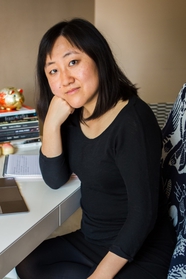
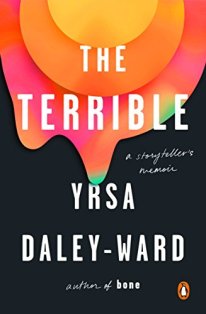 An autobiographical poem or a poetic autobiography, Yrsa Daley-Ward’s memoir is a testimony to the tenacity of the human spirit, its ability to contain an immense darkness and release it in waves of destruction, love, and poetry. As a child, Yrsa and her little brother are raised partly by their strict, religious grandparents and by their single mother. As Yrsa gets older, her body becomes a “haunted unreal place”, where mental illness reigns. Her body is the source of her power as well as her fear. Her story gives voice to the chaos of sexuality, addiction, depression, and anxiety, and the potential for redemption in the form of self-expression.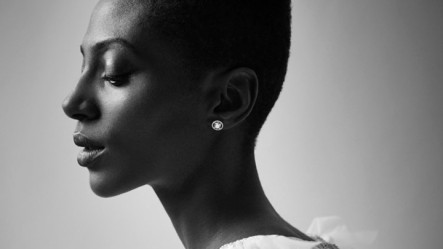
 ode to shelf-care