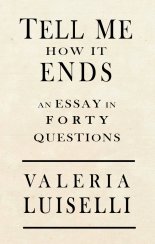
 An essay in 40 questions, beginning with “Why did you come to the US? Where are your parents?”
In Tell Me How it Ends, Valeria Luiselli shares her experience as an interpreter for refugee children from Central America arriving in the United States. As she fills out the intake questionnaire with each child, she attempts the impossible task of reducing the traumas of their life into a few blank lines.
The maddeningly concise questions minimize the underlying tragedy—the fact that thousands of children with the right to political asylum, the right to a dignified life free of violence and persecution, are quickly filtered through the US legal system. Often, they are deported as “illegals” before receiving legal support or due process to obtain refugee status.
Luiselli’s work is a testament to her commitment to making these stories known and heard. Many of the questions she asks the children are unanswerable, beyond comprehension, or too sad to muster a coherent response, but the call to action for the rest of us is much clearer:
“And perhaps the only way to grant any justice—were that even possible—is by hearing and recording those stories over and over again so that they come back, always, to haunt and shame us. Because being aware of what is happening in our era and choosing to do nothing about it has become unacceptable. Because we cannot allow ourselves to go on normalizing horror and violence. Because we can all be held accountable if something happens under our noses and we don’t dare even look.”
This book gives readers the opportunity to bear witness to the suffering of others, understand why families and children will continue to flee oppressive conditions, and hopefully inspire readers to take action against dehumanizing policies.

“And once you’re here, you’re ready to give everything, or almost everything, to stay and play a part in the greater theater of belonging.”
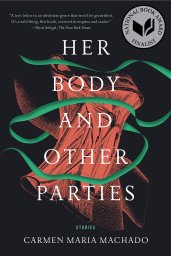 One thing I love about essay and story collections is seeing the recurring images and ideas that pop up throughout, like the weeds (or wild flowers?) of the author’s subconscious. As the title suggests, Her Body and Other Parties by Carmen Maria Machado is full of women’s bodies—bodies disappearing, falling apart, taking up space. With hints of surrealism, Machado’s stories explore the ways that we are continually haunted by past traumas. She renders the neurotic mania that sometimes takes the wheel when women remain unheard or misunderstood as well as the pain of feeling like a burden to your loved ones. Her characters don’t necessarily find healing and happy endings, but I love that they face their truest selves, no matter how terrifying it is, and fiercely pursue what they most desire.


 ode to shelf-care