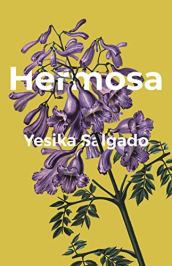
In the poetry collection “Hermosa”, Yesika Salgado brings forth a life in multitudes as she writes about her home of Los Angeles, lingering love, the healing power of friendship, childhood memories brought into the stark light of adulthood, complicated deaths of people who were difficult to love, the cultured gender norms in her Salvadoran family, and more. Salgado both grieves for the LA she recognizes as being deformed by gentrification while honoring her deep love for it, reveling in the anonymity of city life and her Polaroid-picture-nostalgia for its nooks and quirks.
With bright, crisp language, Salgado’s poetry is a fiery heart laid open. Each verse thrums with energy as Salgado gives space for every emotion and every detail—from heartbreak to soil tracked into the house, from long, running verses, to just a line or two that needed to be written all on their own. Salgado is a natural storyteller whose pride in all of her brilliant, flawed, and tender self truly shines through in the collection.

…those were my favorite stories. women doing what women don’t do. I imagined all the beer I’d drink when I got older. I’d chug it down like a cold soda and burp loudly on purpose. I’d cackle big and booming. wouldn’t care when the mujeres say ¡esa nina es tremenda! instead I’d lift another beer and say ¡asi es! ¡salud!
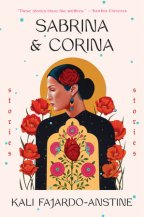 In this debut collection of stories, Fajardo-Anstine weaves together an exquisite tapestry of Indigenous Chicana women. Set in modern Denver as gentrification morphs the landscape into something unrecognizable, the characters navigate an unrelenting world through sheer determination and lack of any other alternative. These are stories about displacement and female relationships—about physical realities that are easily and carelessly destroyed, as well as the deep roots that persist through generations.
 An essay in 40 questions, beginning with “Why did you come to the US? Where are your parents?”
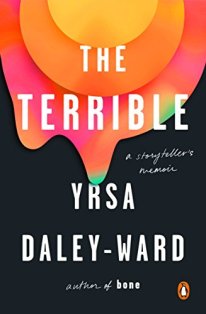 An autobiographical poem or a poetic autobiography, Yrsa Daley-Ward’s memoir is a testimony to the tenacity of the human spirit, its ability to contain an immense darkness and release it in waves of destruction, love, and poetry. As a child, Yrsa and her little brother are raised partly by their strict, religious grandparents and by their single mother. As Yrsa gets older, her body becomes a “haunted unreal place”, where mental illness reigns. Her body is the source of her power as well as her fear. Her story gives voice to the chaos of sexuality, addiction, depression, and anxiety, and the potential for redemption in the form of self-expression.
 ode to shelf-care