
“She knew and, despite the weight of it, accepted her role as liberator of a frightened man. María Isabel thought it had always been women who wove the future out of the scraps, always the characters, never the authors. She knew a woman could learn to resent this post, but she would instead find a hundred books to read.“
Full review at LatinoBookReview.com
Of Women and Salt by Gabriela Garcia is a multigenerational story that traces the ways women learn to resist power structures and endure suffering with a ferocity born of love and lack of choices. In the beginning, there is María Isabel, a woman whose survival requires learning to read in secret and working as the only woman rolling cigars in a factory. In the midst of the first Cuban revolution in the 1860’s, María Isabel becomes the matriarch of a long line of courageous women navigating an unjust world. Jeanette, five generations later, is at the other end of two revolutions and a diaspora that led part of the family to Miami.
Garcia’s characters are like the heroes of so many families—mothers and guardians who make impossible choices and spend a lifetime making peace with them. Over the span of 150 years, these families witness revolutionary political changes and cope with their inherited traumas. This extensive timeline is evidence of a tendency for patterns, both good and bad, to persist no matter how much one tries to live in isolation from the past. Irrespective of time and place, Of Women and Salt speaks to the universal human desires to survive and to belong.



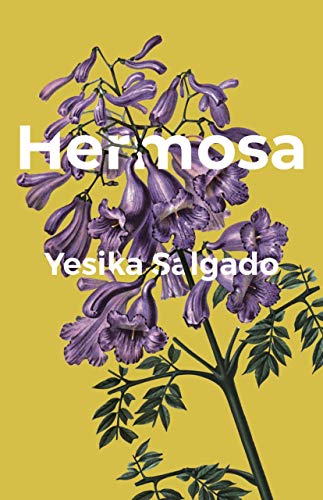

 After coming out as a lesbian to her religious, Puerto Rican family, Juliet leaves the Bronx for the first time to take on an internship with a celebrity-status, feminist author in Portland. She arrives in this alien city characterized by a subculture of “hippie white” both elated by the prospect of living and learning with her feminist hero and wounded by the rift her identity has created between her and her mother.
 Roxane Gay began this anthology in an attempt to unravel the nebulous concept of “rape culture”– to engage with the question, “What is it like to live in a culture where it often seems like it is a question of when, not if, a woman will encounter some kind of sexual violence?” Ultimately, this piece became a place where diverse individuals across the gender spectrum could reclaim their own stories, free from expectations about what it means to carry the burden of trauma.
 In this debut collection of stories, Fajardo-Anstine weaves together an exquisite tapestry of Indigenous Chicana women. Set in modern Denver as gentrification morphs the landscape into something unrecognizable, the characters navigate an unrelenting world through sheer determination and lack of any other alternative. These are stories about displacement and female relationships—about physical realities that are easily and carelessly destroyed, as well as the deep roots that persist through generations.



 Roxane Gay has a truly inspiring ability to write about sexual violence through the unfiltered, unapologetic voice of a survivor. In this novel, she details the unravelling of a woman after she is kidnapped for ransom in Haiti—the destruction of a woman’s body and her fundamental sense of self.


 ode to shelf-care