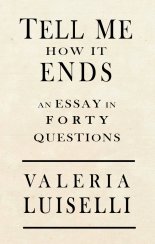
 An essay in 40 questions, beginning with “Why did you come to the US? Where are your parents?”
In Tell Me How it Ends, Valeria Luiselli shares her experience as an interpreter for refugee children from Central America arriving in the United States. As she fills out the intake questionnaire with each child, she attempts the impossible task of reducing the traumas of their life into a few blank lines.
The maddeningly concise questions minimize the underlying tragedy—the fact that thousands of children with the right to political asylum, the right to a dignified life free of violence and persecution, are quickly filtered through the US legal system. Often, they are deported as “illegals” before receiving legal support or due process to obtain refugee status.
Luiselli’s work is a testament to her commitment to making these stories known and heard. Many of the questions she asks the children are unanswerable, beyond comprehension, or too sad to muster a coherent response, but the call to action for the rest of us is much clearer:
“And perhaps the only way to grant any justice—were that even possible—is by hearing and recording those stories over and over again so that they come back, always, to haunt and shame us. Because being aware of what is happening in our era and choosing to do nothing about it has become unacceptable. Because we cannot allow ourselves to go on normalizing horror and violence. Because we can all be held accountable if something happens under our noses and we don’t dare even look.”
This book gives readers the opportunity to bear witness to the suffering of others, understand why families and children will continue to flee oppressive conditions, and hopefully inspire readers to take action against dehumanizing policies.

“And once you’re here, you’re ready to give everything, or almost everything, to stay and play a part in the greater theater of belonging.”
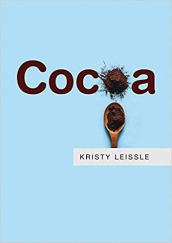 How did cocoa go from being a highly masculinized beverage for Mesoamerican warriors, to a status symbol for European sociopolitical elite, to its current position as a highly accessible global luxury? How is it magically transformed from an alien-like tropical tree fruit to the glossy little packages on grocery store shelves? What does it mean to be an ethical consumer of chocolate?
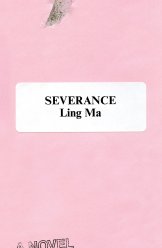 Candace is an aspiring photographer who thrives on the routine of her young professional life in New York City. She navigates the city in contented anonymity and plays her part as a competent and vital cog in the mass production of Bibles for publishing clients. As an epidemic of Shen Fever threatens the global population, Candace clings to the comforts of her 9 to 5 job, while the rest of the city flees to hometowns to find family and refuge. An orphaned daughter of immigrants, Candace is on her own until she joins up with a group of survivors led by Bob—an IT guy on a power trip, looking to enact his own vision for a new society.
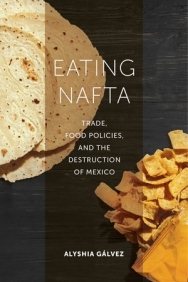 Originally published on Latinobookreview.com
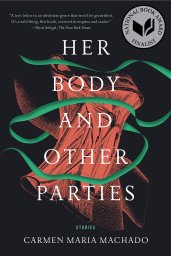 One thing I love about essay and story collections is seeing the recurring images and ideas that pop up throughout, like the weeds (or wild flowers?) of the author’s subconscious. As the title suggests, Her Body and Other Parties by Carmen Maria Machado is full of women’s bodies—bodies disappearing, falling apart, taking up space. With hints of surrealism, Machado’s stories explore the ways that we are continually haunted by past traumas. She renders the neurotic mania that sometimes takes the wheel when women remain unheard or misunderstood as well as the pain of feeling like a burden to your loved ones. Her characters don’t necessarily find healing and happy endings, but I love that they face their truest selves, no matter how terrifying it is, and fiercely pursue what they most desire.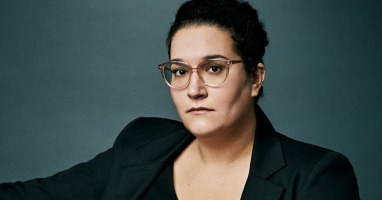
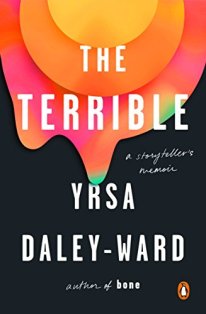 An autobiographical poem or a poetic autobiography, Yrsa Daley-Ward’s memoir is a testimony to the tenacity of the human spirit, its ability to contain an immense darkness and release it in waves of destruction, love, and poetry. As a child, Yrsa and her little brother are raised partly by their strict, religious grandparents and by their single mother. As Yrsa gets older, her body becomes a “haunted unreal place”, where mental illness reigns. Her body is the source of her power as well as her fear. Her story gives voice to the chaos of sexuality, addiction, depression, and anxiety, and the potential for redemption in the form of self-expression.

 Eviction exposes the cataclysmic effect of unstable housing as Desmond follows the lives of eight families facing eviction and substandard living conditions in Milwaukee. By embedding himself in a trailer park on the South side and a rooming house on the North side, Desmond learns about how housing policies often punish victims of domestic violence, why the presence of children nearly triples the likelihood of a tenant receiving an eviction judgment, and how government housing subsidies ultimately line the pockets of upper class Americans while access to affordable housing remains unattainable for many.
 Julia Alvarez tells the story of 12-year-old Anita, whose family joins the resistance against Dictator Trujillo in the Dominican Republic during the 1960’s. While coping with the early stages of puberty, Anita also grapples with the concepts of justice and freedom as General Trujillo, “El Jefe”, and the secret police terrorize her family.

 ode to shelf-care