 In this fragmented memoir of her relationship with an abusive long-term partner, Machado imbues her own personal story with an exposition of the “archival silence” on the topic of abuse in the queer community. It starts with a fervent crush on a beautiful, charming acquaintance. Progressing through the stages of friendship, torrid love, and polyamorous romance, the “woman in the dream house” gradually transforms into a manipulative, living nightmare. Their mutual infatuation, tangled up with the euphoria of love and lust, leads to a co-dependent relationship—a deceptive bondage that is all too common in romantic partnerships.
With each short chapter, Machado dares readers to continue exploring every inexplicable contradiction and dark crevice of the hellish relationship that dominates her life. Machado forces the reader into the protagonist’s mind and body with the 2nd person narration throughout the book and a detour into a downward spiraling “choose your own adventure” scenario. The memoir is sprinkled with references to the Motif-Index of Folk-Literature—frequent reminders that while her experience is unique and devastating, elements of her story are also universal and timeless.
As she unearths years of emotional trauma, Machado also explains how gendered perceptions of abusers and victims excludes narratives of the non-binary and queer, leaving a historical, legal, and canonical void where stories of countless people have been invalidated by mainstream culture. Machado’s domestic fantasy turned to extreme dysfunction claims a space in literature that has long been silenced. In the collective bits of her broken self and story, Machado’s insight illustrates why it’s important to value the stories not only of the obvious perpetrators of violence, but also the terrors taking place all the time beyond white picket fences and the façade of the dream house.

“I speak into the silence. I toss the stone of my story into a vast crevice; measure the emptiness by its small sound.”
 In the Affairs of the Falcóns, Rivero illustrates the complex politics and emotions at play within a single family trying to make their way as immigrants in a the US: the racism and classism within the Peruvian community, strained loyalties and the dissolution of marriages, children being raised as Americans but frequently reminded that they are outsiders, the economic and political regimes that cause widespread displacement, and the sacrifices people will justify in the name of love and survival.
 From the beloved queer Chicana feminist writer Cherríe Moraga, Native Country of the Heart is a memoir told in parallel with the memoir of her Mexican mother, Elvira. Elvira is the foundational stone on which Moraga builds her own Chicana feminism and family, a woman whose beauty, rage, and fuerza incansable were unmatched in the eyes of Cherríe. Cherríe Moraga’s life story is one of reclamation and resistance: reclaiming her indigenous Californian and Mexican roots in a Gringo world, while resisting the shame and guilt forged by the patriarchy and religion of her family’s culture.
 Reading Mouthful of Birds feels like occupying some kind of hybrid world of dreams and folklore, where the subconscious masquerades as a stream of characters enacting scenes that aren’t fully coherent with reality, but every moment is vivid and visceral. The short stories are full of nightmarish scenarios, like someone auditioning to be an assassin by proving their capacity for violence, a man being held captive at a train station indefinitely because he didn’t have the correct change for a ticket, or a teenage girl who will suddenly only eat live birds. The protagonists are oblivious to the bewildering circumstances they are about to endure, and like many of us in our truest nightmares, the characters find themselves misunderstood or full of regret.
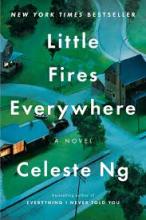 Shaker Heights is the kind of community where garbage is stored always out of sight from the street, and every last detailed is planned, from the diversity of its population to the color scheme of each house. When a free-spirited artist, Mia, and her daughter Pearl move to town, their lives become entangled with the members of the Richardson family, each of whom are either enamored with or infuriated by Mia and Pearl’s nonconformity. After a public scandal arises surrounding the custody of an abandoned baby, everyone in town is obliged to take sides in a controversy that will put ambiguous ethics at odds with family loyalties.
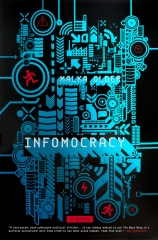 An author and humanitarian worker, Malka Older’s novel Infomocracy comes at a pertinent time– when illegitimate information is being weaponized, and accuracy and transparency of data feels increasingly fragile. In Older’s utopian world of Infomocracy, Information with a capital “I” is glorified in a new world order. Here, groups of 100,000 people elect their own government, and things like the nation-state, guns, and war are obsolete.
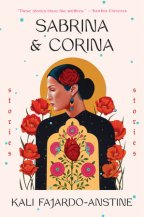 In this debut collection of stories, Fajardo-Anstine weaves together an exquisite tapestry of Indigenous Chicana women. Set in modern Denver as gentrification morphs the landscape into something unrecognizable, the characters navigate an unrelenting world through sheer determination and lack of any other alternative. These are stories about displacement and female relationships—about physical realities that are easily and carelessly destroyed, as well as the deep roots that persist through generations.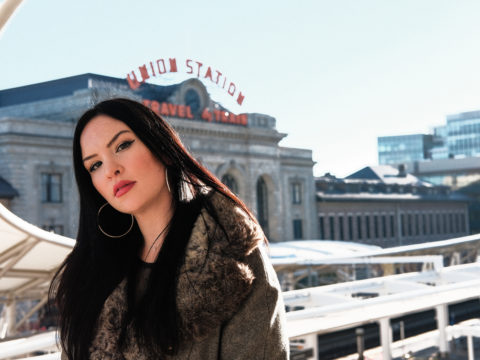
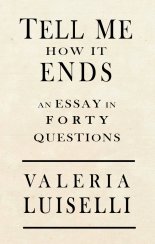 An essay in 40 questions, beginning with “Why did you come to the US? Where are your parents?”
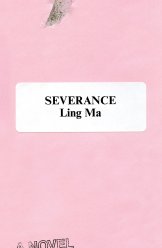 Candace is an aspiring photographer who thrives on the routine of her young professional life in New York City. She navigates the city in contented anonymity and plays her part as a competent and vital cog in the mass production of Bibles for publishing clients. As an epidemic of Shen Fever threatens the global population, Candace clings to the comforts of her 9 to 5 job, while the rest of the city flees to hometowns to find family and refuge. An orphaned daughter of immigrants, Candace is on her own until she joins up with a group of survivors led by Bob—an IT guy on a power trip, looking to enact his own vision for a new society.
 Julia Alvarez tells the story of 12-year-old Anita, whose family joins the resistance against Dictator Trujillo in the Dominican Republic during the 1960’s. While coping with the early stages of puberty, Anita also grapples with the concepts of justice and freedom as General Trujillo, “El Jefe”, and the secret police terrorize her family.
 ode to shelf-care