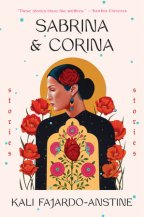
 In this debut collection of stories, Fajardo-Anstine weaves together an exquisite tapestry of Indigenous Chicana women. Set in modern Denver as gentrification morphs the landscape into something unrecognizable, the characters navigate an unrelenting world through sheer determination and lack of any other alternative. These are stories about displacement and female relationships—about physical realities that are easily and carelessly destroyed, as well as the deep roots that persist through generations.
Fajardo-Anstine’s characters have an impressive breadth of personalities and age. They are diverse in their circumstances and yet all linked through their heritage and connection to the land. Whether the story features a little girl tasked with co-parenting a bag of sugar for a class project, or a woman recently released from prison, Fajardo-Anstine brings to life complex familial relationships with heartbreaking clarity.
While these women endure abuse, rejection, loss, and grieving, what stands out the most in these narratives is not their difficult circumstances, but the way others fail to acknowledge or respond to their suffering. On one level, Sabrina & Corina celebrates the way women persevere to hold together the shards of their broken families. But beyond the portraits of female strength, it tells another timeless story of apathy towards violence against women. By telling these stories, Fajardo-Anstine forces ugly truths into the open and gives big voices to those who have been silenced.
This book is truly a cultural gem, capturing the American West and the transformation of Colorado through the lens of its indigenous women.
I thought of all the women my family had lost, the horrible things they’d witnessed, the acts they simply endured. Sabrina had become another face in a line of tragedies that stretched back generations. And soon, when the mood hit my grandmother just right, she’d sit at her kitchen table, a Styrofoam cup of lemonade in her warped hand, and she’d tell the story of Sabrina Cordova—how men loved her too much, how little she loved herself, how in the end it killed her. The stories always ended the same, only different girls died, and I didn’t want to hear them anymore.
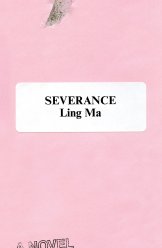 Candace is an aspiring photographer who thrives on the routine of her young professional life in New York City. She navigates the city in contented anonymity and plays her part as a competent and vital cog in the mass production of Bibles for publishing clients. As an epidemic of Shen Fever threatens the global population, Candace clings to the comforts of her 9 to 5 job, while the rest of the city flees to hometowns to find family and refuge. An orphaned daughter of immigrants, Candace is on her own until she joins up with a group of survivors led by Bob—an IT guy on a power trip, looking to enact his own vision for a new society.
 One thing I love about essay and story collections is seeing the recurring images and ideas that pop up throughout, like the weeds (or wild flowers?) of the author’s subconscious. As the title suggests, Her Body and Other Parties by Carmen Maria Machado is full of women’s bodies—bodies disappearing, falling apart, taking up space. With hints of surrealism, Machado’s stories explore the ways that we are continually haunted by past traumas. She renders the neurotic mania that sometimes takes the wheel when women remain unheard or misunderstood as well as the pain of feeling like a burden to your loved ones. Her characters don’t necessarily find healing and happy endings, but I love that they face their truest selves, no matter how terrifying it is, and fiercely pursue what they most desire.
 Julia Alvarez tells the story of 12-year-old Anita, whose family joins the resistance against Dictator Trujillo in the Dominican Republic during the 1960’s. While coping with the early stages of puberty, Anita also grapples with the concepts of justice and freedom as General Trujillo, “El Jefe”, and the secret police terrorize her family.




 Roxane Gay has a truly inspiring ability to write about sexual violence through the unfiltered, unapologetic voice of a survivor. In this novel, she details the unravelling of a woman after she is kidnapped for ransom in Haiti—the destruction of a woman’s body and her fundamental sense of self.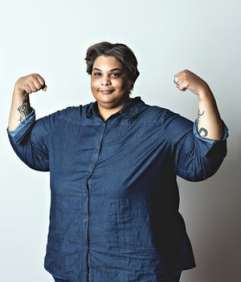


 A Constellation of Vital Phenomena follows a group of interconnected characters in a small village in Chechnya following the fall of the Soviet Union and multiple wars for independence. After a man named Dokka is abducted by Russian soldiers, his 8-year old daughter is taken in by Ahkmed, a neighbor and lifelong friend. Together they take on the task of surviving in what’s left of their world where “happiness came in moments of unpredictable loveliness.”
 ode to shelf-care