“I do not even struggle to speak; the spark of words dies so deep in my chest there is not even space to mount them on an exhale.”
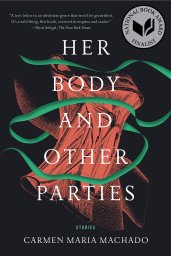 One thing I love about essay and story collections is seeing the recurring images and ideas that pop up throughout, like the weeds (or wild flowers?) of the author’s subconscious. As the title suggests, Her Body and Other Parties by Carmen Maria Machado is full of women’s bodies—bodies disappearing, falling apart, taking up space. With hints of surrealism, Machado’s stories explore the ways that we are continually haunted by past traumas. She renders the neurotic mania that sometimes takes the wheel when women remain unheard or misunderstood as well as the pain of feeling like a burden to your loved ones. Her characters don’t necessarily find healing and happy endings, but I love that they face their truest selves, no matter how terrifying it is, and fiercely pursue what they most desire.

In the realm of sense and reason it seemed logical for something to make sense for no reason (natural order) or not make sense for some reason (the deliberate design of deception) but it seemed perverse to have things make no sense for no reason. What if you colonize your own mind and when you get inside, the furniture is attached to the ceiling? What if you step in side and when you touch the furniture, you realize it’s all just cardboard cutouts and it all collapses beneath the pressure of your finger? What if you get inside and there’s no furniture? What if you get inside and it’s just you in there, sitting in a chair, rolling figs and eggs around in the basket on your lap and humming a little tune? What if you get inside and there’s nothing there, and then the door hatch closes and locks?
What is worse: being locked outside of your own mind, or being locked inside of it?
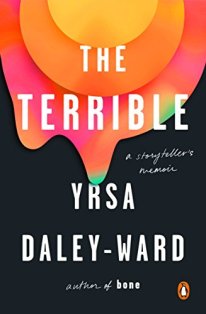 An autobiographical poem or a poetic autobiography, Yrsa Daley-Ward’s memoir is a testimony to the tenacity of the human spirit, its ability to contain an immense darkness and release it in waves of destruction, love, and poetry. As a child, Yrsa and her little brother are raised partly by their strict, religious grandparents and by their single mother. As Yrsa gets older, her body becomes a “haunted unreal place”, where mental illness reigns. Her body is the source of her power as well as her fear. Her story gives voice to the chaos of sexuality, addiction, depression, and anxiety, and the potential for redemption in the form of self-expression.
 Julia Alvarez tells the story of 12-year-old Anita, whose family joins the resistance against Dictator Trujillo in the Dominican Republic during the 1960’s. While coping with the early stages of puberty, Anita also grapples with the concepts of justice and freedom as General Trujillo, “El Jefe”, and the secret police terrorize her family.




 “The human being was a happy creature, but he created a hard world and now struggles trying to break out of it.”
 Roxane Gay has a truly inspiring ability to write about sexual violence through the unfiltered, unapologetic voice of a survivor. In this novel, she details the unravelling of a woman after she is kidnapped for ransom in Haiti—the destruction of a woman’s body and her fundamental sense of self.


 ode to shelf-care