Shame is an Ocean I Swim Across by Mary Lambert

41BX3lTQjAL._SX316_BO1,204,203,200_

In this collection of poetry, Mary Lambert lays her heart bare as she writes about navigating love, artistry, and healing as a survivor of sexual violence. Not exactly a light read, her poems are the kind that poke at your insides like acupuncture for the soul. There is a dark playfulness to some of her poems, and the emotional tone oscillates between redemption and sorrow in that bewildering way we tend to experience them in real life. I’m thankful for women like Mary Lambert who give strength to us all by speaking up in a world where shame fosters silence and increasing isolation.


“I once touched a tree with charred limbs

The stump was still breathing

But the tops were just ashy remains

I wonder what it’s like to come back from that”


Mary-Lambert-12


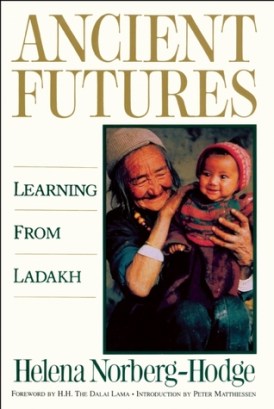
Ancient Futures by Helena Norberg-Hodge

566224

While working in international development, I found myself questioning whether foreign aid does more harm than good. I could list out ways that it failed to provide lasting solutions and effected unintended negative consequences, but I could never quite respond to the “then what do we do instead?” question that I often got from people. Rather than continuing on the path of misguided development efforts (creating energy and resource-intensive systems that emphasize economic growth at any cost), do we instead turn a blind eye to the problems largely created by Western imperialism? In Ancient Futures, Norberg-Hodge talks about the destructive forces of development and provides an alternative vision for what she calls “counterdevelopment”.

The author first came to Ladakh in 1975, back when there was barely any Western influence in this ancient society. She became fluent in the local language, immersed herself in the community over many years, and witnessed the dramatic changes that occurred as globalization infiltrated the Tibetan plateau. Norberg-Hodge sheds light on some of the many admirable qualities embodied in the Ladakhi communities—self-reliance, social harmony, and ecological balance, all of which seemed to be rooted in the limitations of their environment and a spiritual awareness of the “profound interconnectedness of all phenomena”. As tourism, industrial agriculture, and other commercial forces have created a dependence on the global economy, the Ladakhis’ connection to place and community have been impaired, repeating a pattern of social and ecological collapse that is occurring all around the world at an increasing rate.

Instead of exporting a model of an unsustainable lifestyle, counterdevelopment focuses on resisting the consumerist monoculture by re-localizing economies and actively encouraging ecological and cultural diversity.

“Once, I tried to explain the concept of stress to some villagers. ‘You mean you get angry because you have to work?’ was the response. Every day I saw people from two cultures, a world apart, looking at each other and seeing superficial, one-dimensional images. Tourists see people carrying loads on their backs and walking long distances over high mountain passes and say, ‘How terrible; what a life of drudgery.’ They forget that they have traveled thousands of miles and spent thousands of dollars for the pleasure of walking through the same mountain with heavy backpacks. They also forget how much their bodies suffer from lack of use at home. During working hours they get no exercise, so they spend their free time trying to make up for it. Some will even drive to a health club—across a polluted city in rush hours—to sit in a basement, pedaling a bicycle that does not go anywhere. And they actually pay for the privilege.”

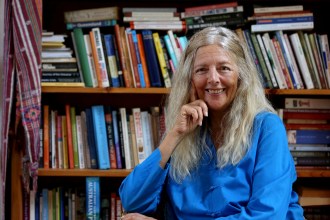
Helena-Norberg-Hodge-NVF-Photographics

Signs Preceding the End of the World by Yuri Herrera

Signs-Preceding-the-End-of-the-World-_RGB-823x1263

The novel opens with surrealist undertones as the main character, a young woman named Makina, is about to cross over to another world. Makina has been tasked by her mother to cross the border from Mexico to find her brother who left 3 years earlier. In order to have a chance at succeeding, Makina is forced to cooperate with the local cartel, who promise to help secure safe passage in exchange for a favor.

Makina’s journey illustrates the unimaginable risk undertaken by those crossing the border illegally, the stakes that make it worth losing everything, and the forces that motivate immigrants to stay in a new country despite their permanent status as an outsider in a disillusioned society. By showing the US through Makina’s perspective, Herrera turns the tables on the common notion of Latinx immigrants as criminals.  In the US, Makina’s compatriots must be “armed with work”, constantly deflecting persecution and protecting themselves from violence by existing just on the edges, in the backs of restaurants and on bleak construction sites.

The story also showcases savvy women who choose not to be victims in a misogynistic society. The women adapt ways to harness their power without men even noticing the ways that they take control of their lives and communities. Early on in the book, her mother says, “I don’t like to send you, child, but who else can I trust it to, a man?” Makina’s power stems from her ability to interpret many layers of language in her job as a switchboard operator as well as acting as an emissary between two entangled cultures.

Herrera has an unexpectedly whimsical use of language, his words both simple and inventive. The English translation captures this surprisingly well; the original Spanish version is surely even richer. The plot is largely executed in the abstract, with towns, countries, and activities that go unnamed but are understood implicitly by the reader. These concepts are interspersed with tangible details that bring to mind stark images. To read this book is to take a journey to the US from the Other Side—any origin/identification/language that makes you forever the target of disdain and suspicion.


“The city was an edgy arrangement of cement particles and yellow paint. Signs prohibiting things thronged the streets, leading citizens to see themselves as ever protected, safe, friendly, innocent, proud, and intermittently bewildered, blithe, and buoyant; salt of the only earth worth knowing.”

slu_yuri_herrera

1491: New Revelations of the Americas before Columbus by Charles C. Mann

51XhPA4C8uL._SX306_BO1,204,203,200_

Charles C. Mann’s 1491 re-tells the history of the Americas as it has been revealed over the last several decades of advanced research. Starting by correcting the massively underestimated pre-Columbian population figures, Mann then shifts focus to the next logical question—what were all those millions of people up to before small pox and Columbus arrived? The last section of the book discusses the ancient ecology of the Americas and why its collapse inevitably followed the destruction of Indian societies.

Each chapter is full of boots-on-the-ground research efforts, the high drama of the academic world, and myth debunking evidence.  Mann’s level of detail is complete with appendices on topics such as loaded words and the technical details of the ancient Mesoamerican calendar. Throughout the book, Mann equivocates about politically charged disagreements regarding native communities and more importantly, insists on something long denied the American indigenous—the dignity of agency in their own history.

1491 is important because it points out why the Americas was not, in reality, a New World simply because it was new to Europeans in the 15th century. Many modern environmentalists who advocate for restoring land to a “pristine, wild” state of the past fail to acknowledge an entire continent of diverse ecosystems that were highly managed and integrated with native communities before those societies were decimated. This book is proof of the monumental gaps in our understanding of the world as well as the underestimated legacy of the people who were exploited to make a privileged Western society possible.


“Understanding that nature is not normative does not mean that anything goes. The fears come from the mistaken identification of wildness with the forest itself. Instead the landscape is an arena for the interaction of natural and social forces, a kind of display, and one that like all displays is not fully under the control of its authors.”

22004

Women Who Run with the Wolves by Clarissa Pinkola Estés

women who run with the wolves

Women Who Run with the Wolves is a collection of myths and stories venerating the Wild Woman–the powerful, instinctive nature that lives within every woman. Collected over a lifetime from around the world, and especially from the author’s Latina and Eastern European ancestors, the stories teach us that the Wild Woman brings vitality, good instincts, and creative fire to the female soul. Through the characters and archetypal symbolism, Estes teaches women how to nourish the Wild Woman in order to avoid falling victim to an over-civilized culture and other predators both external to and within our own psyches.

 In contrast to the watered down, Christianized fairy tales of modern times, these stories are dark and messy. Each one, combined with commentary, reveals insight into topics such as romantic relationships rooted in soul-craving, seeing through illusion, finding people we belong to, embracing the Life/Death/Life cycle, and how to live in a way that honors the untamed criatura within each of us.

I hope that all of the women I love will read this one for the spiritual healing it can bring at any stage of their post-adolescent life. I suspect that different chapters will speak to women at different points in their journey, and I plan to read it multiple times!


“The balanced valuing of emotion is certainly an act of self-respect. Even raw and messy emotions can be understood as a form of light, crackling and bursting with energy. We can use the light of rage in a positive way, in order to see into places we cannot usually see.”

staff_clarissa

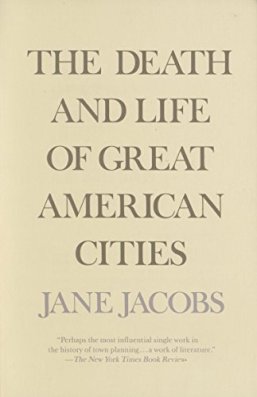
The Death and Life of Great American Cities by Jane Jacobs

41WY2+bCB2L

This book is an activist’s ode to the ineffable nature of cities–places full of a regenerative vitality that we often diminish in our attempts to organize them via conventional city planning. Rather than molding cities in to a utopic image of what we think cities should look like, Jacobs’ key focus is how to revitalize American cities based on simple principles that promote diversity of uses, people, and structures over time and space.

Encompassing everything from safety, to economics, to unslumming neighborhoods, to traffic control, Jacobs’ four conditions for vitality are a strategy that I like to think of as a holistic healing method for all of the interrelated elements of a city. She dives deep into often ignored details like the role of informal surveillance of sidewalks, e.g. storekeepers, people running errands, the old guy always sitting on his stoop, homeless individuals (or the “leisurely indigent” as she calls them). Each section is detailed and concise, and Jacobs always relates the individual concepts back to the larger end goal of vitality and diversity.

Jacobs’ writing is full of a scathing wit that I often observe among writers going against the academic grain, and her arguments are logical—founded in common sense and observation. The book was originally published in 1962, and yet the concepts still ring true today. The same problems and failures attributed to orthodox city planning could be applied to any number of other fields—the financial system, human health, agriculture, and more. As with any dynamic organism, Jacobs argues that we can nourish a city and provide a positive environment while also acknowledging our incomplete understanding of its complexity. While this book made me feel disappointed by our lack of progress in creating healthy cities, it also provides a way forward and a genuinely optimistic outlook for the future of American cities.

“Conventional planning approaches to slums and slum dwellers are thoroughly paternalistic. The trouble with paternalists is that they want to make impossibly profound changes, and they choose impossibly superficial means for doing so.”

jane jacobs

The One-Straw Revolution by Masanobu Fukuoka

fukuoka “The human being was a happy creature, but he created a hard world and now struggles trying to break out of it.”

Fukuoka’s iconic book about natural farming explains how his simple principles of working the land depend on our ability to cast aside the human will and ego. By observing and cooperating with the natural patterns of nature, he has found a way to produce an abundance of rice, winter grains, citrus, and wild vegetables on land that becomes more fertile with each year.

His journey begins at the age of 25, when the simple thought occurs to him that humans know nothing at all. As he follows this concept to its logical conclusion (maybe he doesn’t even exist at all!), he abandons a way of life centered on human knowledge, choosing instead to fully embrace the incomprehensibility of nature. The four principles of his farming are simple: 1) no plowing 2) no chemical fertilizers or prepared compost 3) no weeding by tillage or herbicide and 4) no dependence on chemicals. His methods are based on decades of observations of complex, naturally occurring systems. In short, he aims to do as little as possible to interfere with these systems.

While the language of the book is simple, the philosophy is a bit mind-bending. Ironically, Fukuoko encourages readers to not try to intellectualize it. In the end, Fukuoka’s most poignant point is that we can choose to live within a different societal construct from the one that has caused so much destruction to the earth, body, and spirit. He explores details such as the role of a spider within his rice fields and the synergistic effects of a specific acacia tree, while also linking these specific examples to a holistic concept of ecological health. Fukuoka’s life and his impact on those who have visited his farm are a breath of fresh air to those of us who have read too many books about the many ways we are depleting the earth.


shapeimage_2

An Untamed State by Roxane Gay

Gay-An-Untamed-State-jacket-art-9780802122513Roxane Gay has a truly inspiring ability to write about sexual violence through the unfiltered, unapologetic voice of a survivor. In this novel, she details the unravelling of a woman after she is kidnapped for ransom in Haiti—the destruction of a woman’s body and her fundamental sense of self.

As a first generation Haitian-American, Mireille copes with the uncomfortable contrast between her family’s wealth and the poverty of a country that is both an integral part of her identity and a place she can never really understand. Throughout the book, Gay’s characters are forced to determine what physical and emotional ransoms they are willing to sacrifice for survival. The novel is also critical of Western perceptions of poorer countries but refrains from presenting readers with any simple conclusions regarding ambiguous identity politics.

It’s a heavy read, but an important one—the timeless story of the destruction of women at the hands of entitled, prideful men. The dialogue felt a bit heavy-handed at times, but I appreciated the fact that the relationships are full of the frustrations and contradictions that push us to our limits, for better or worse, when it comes to the people we love the most.

 “There is nothing you cannot do when you are no one.”

gay

I Know Why the Caged Bird Sings by Maya Angelou

angelouMaya Angelou’s memoir begins in Stamps, Arkansas during the 1930’s. In this rural community, raised by her grandmother and crippled uncle, she learns from a young age what it means to be a tough woman as she and her family endure the humiliations of racism and prejudice. When her estranged father unexpectedly returns for Maya and her brother, they are introduced to an entirely new cast of family members and misadventures as they transition to life in urban northern cities.

This biography reads like a heartbreaking poem. With a seamless narrative style, Angelou depicts the petty struggles of adolescence alongside the traumatizing injustices of being a young black girl. She recounts her experiences in the refined voice of her adult self while capturing the innocence of her younger version. I loved reading Angelou’s story, and by the last page I was overwhelmed with awe at the woman she becomes.


“It seemed terribly unfair to have a toothache and a headache and have to bear at the same time the heavy burden of blackness.”

 “Horatio Alger was the greatest writer in the world. His heroes were always good, always won, and were always boys. I could have developed the first two virtues, but becoming a boy was sure to be difficult, if not impossible.”

angelou1.jpg


I Am Not Your Perfect Mexican Daughter by Erika Sánchez

iam not

Of all of the coming of age stories I’ve read in my life, this novel is the first that made my heart swell with pride as I recognized bits myself in a young Mexican-American woman forging her identity in the uncharted territory of early adulthood.

Julia is an emotional and short-tempered teenager who struggles to relate to both her parents and peers. She’s a bookworm and grammar snob who fantasizes about her future library. She stumbles over her Spanish when she’s nervous and falls for a white boy whose privileged community feels like a different planet to her. After the sudden death of her older sister, Julia begins to learn more about the life her sister led behind closed doors and questions whether the truth is more valuable than the tenuous threads barely keeping her family together.

The novel features a young adult not only battling the timeless issues of teenage heartbreak and social anxiety, but also those struggles specific to the immigrant family identity. The protagonist’s hilarious voice is abrasive and witty, insecure and overconfident at the same time. I would highly recommend this book to anyone—readers of all ages will undoubtedly relate to Julia and her family in unexpected ways.

“But where are you from from?”

“I’m from Chicago. I just told you.”

“No, what I mean is…Forget it. ” Connor looks embarrassed.

“You mean you want to know my ethnicity. What kind of brown I am.” 

sanchez